.png)
Longevity Monitor
Choose your measurement
Longevity Monitor
Not how old you are — how old you measure.
Past thirty, your body starts asking questions. Not loudly — fitness that quietly drops a gear, balance that takes slightly more attention, tension that lingers longer than it used to. If you intend to stay healthy, you don't want to guess where you stand. You want to know.
The Longevity Monitor maps how your body is really doing in a single appointment, using equipment and tests normally found only in research settings. No blood draws, no radiation, no pain.
What we measure
Five domains that together shape how you age: your blood vessels and blood pressure, your tissue age, your body composition, your strength and fitness, and your capacity to recover. Every value is compared with what is normal for your age and sex — so you see not just your score, but how you compare with your peers.
What you receive
A personal report that shows you at a glance where you are strong and where there is ground to gain. With concrete options to act on, a realistic estimate of how long change takes — and a look ahead: which direction have you set out in, and which direction is still open?
What you do with the results is up to you. Guidance is available with us, with a personal trainer, or elsewhere — the measurement stands on its own. Repeat it after six to twelve months, and you will see, in black and white, what your effort has delivered.
Longevity Monitor · ± 1 hour
The complete baseline: blood vessels, tissue age, body composition, strength, fitness and recovery — concluded with your personal report and a conversation about what the numbers mean for you.
For those who want to know where they stand.


Longevity Monitor Complete · ± 2 hours
Everything in the baseline, plus two deep-dives:
Movement analysis — how freely do your neck, shoulders and back move, and how does your body hold up under load? Twenty-six items, from balance to jumping, distilled into the patterns that predict injury — and that respond to training.
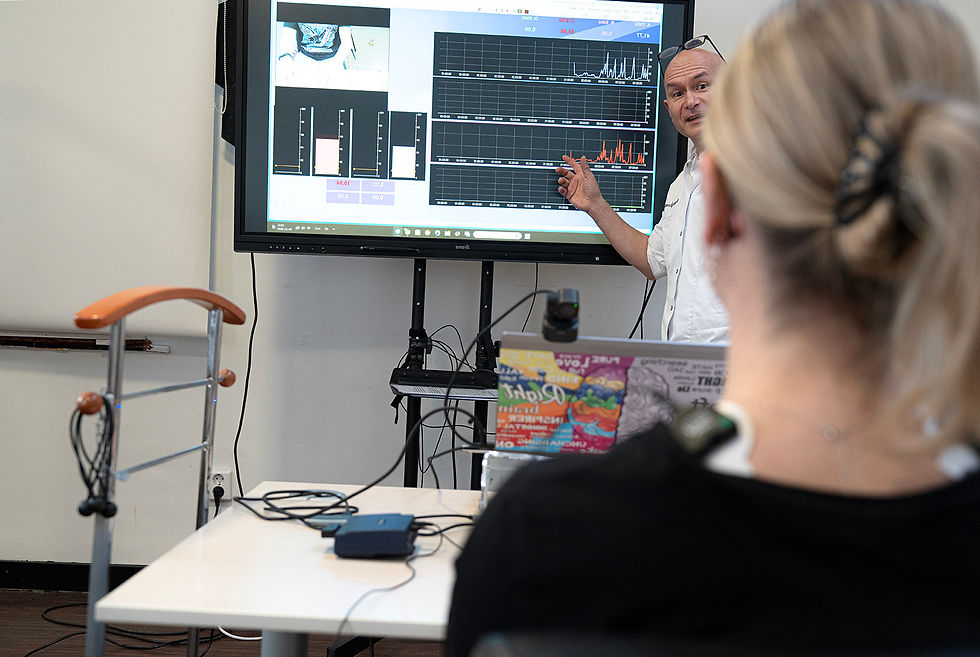
Stress imprint — tension you no longer notice still leaves its mark. We measure four body signals at once: at rest, under pressure, and during the recovery that follows. The story is not how high you peak, but how quickly your body settles again — and whether you can steer that yourself. Not a questionnaire whose desired answer you already know: what your body shows cannot be steered.
For those who want the whole story.
